Showing posts with label designer PJ Aranador. Show all posts

Wednesday, 13 April 2022

Vanessa Caro speaks about her mother

For many, our mothers are the real MVPs in our lives. ✨


I moved to the Philippines from Hawaii with my parents at eight years old. At the time, it was a big adjustment for a kid who left everything she knew. After 50 years of hard work, my father was ready to retire and return to his true home - Iloilo.


I cried in my mother's lap every day, wondering how I could get back to Hawaii. While I remember being in agony, I'm grateful for my parents moving to the Philippines because I can't imagine a life without its culture ingrained in me.


While I speak of past challenges, as a young adult today, I can't help but think of my mother, who had to adjust her life because of her love for me and my father. She was a professional Polynesian performer and designer in her prime for over 30 years in Waikiki. How could she pack up her things and leave?


As we celebrate International Mother Language Day today, I hope we also remember the people who teach us the language. I'm honored to have learned the Hiligaynon language (and continue learning it), but even more proud that after 15 years of living in Iloilo, my mother, part Visayan, instilled the importance of the English language. Without her, I couldn't communicate with people worldwide, share this story, and post this today. šŸ’—


#internationalmotherlanguageday

#MotherLanguageDay

#iloiloprovince

Vanessa Caro and her mother 


Tuesday, 12 April 2022

PASA-VOGUE Vanessa Caro Miss Universe Philippines 2022 Iloilo Province


Pasa-VOGUE.  A Filipino slang which means to create something exciting, unique and  noticeable.  


In fashion, perhaps it means innovation. Miss Universe Philippines 2022 Iloilo Province Vanessa Caro  promotes anything and everything from her roots, the Ilonggo and the Filipino for the universe to appreciate and patronize. 
Van's  love of anything local becomes relevant to re-live the over 500 years of handloom weaving tradition  in Iloilo Province, the textile capital of the Philippines in the past. It pumps up the new world in  local and national  economy to restart to a high bar. 

A Master’s Degree in Professional Studies and Public Relations  at the City University of  New York in USA, Van's  understanding of local culture, rural they may be,  transgresses into the modern universe.  

Vanessa wears an individually hand-cut hablon foliage dress  by Ilonggo designer Hector Totong Gellangarin who meticulously and graphically engineered this haute-couture  piece which when opened  forms a flower petal. He who also designed the exquisite Iloilo  "patadyong" clutch for Vanessa.

 Jewelry  Regine Sarabia Espinosa of RSE Jewelry HMUA  Benjie Emboltorio Sevilla Photography  Eldred Neal Sollesta  I Balay Sigahum. Shoot Sponsored by Iloilo Dingayang Foundation, Inc.  Dinagyang Idfi Glam Squad:   Jun-g Bayona Candelario  Dennis S. Mallada Jemuel Jr Barrera Garcia Genevieve Nares Bob Montalban Thanks to  Iloilo Gov. Toto Defensor Jr. and Bombette Golez Marin of the Iloilo Province Office of History, Culture, Arts and Tourism.PJ AraƱador MUPh 2022 Accredited Partner.

.#MissUniversePhilippines2022 
#MUPH2022 
#MUPHSisterhood 
#UniquelyBeautiful
#MuPH
#Muph2022iloiloprovince 
#Kumuniverse
#Kumu
#Vanstoppable
#AcesAndQueens
 

Miss Universe Phillipines 2022 Iloilo Province Vanessa Caro


 THE FILIPINA MARILYN MONROE? 
Imagine  the iconic Marilyn Monroe in Iloilo hablon as her skirt was blown away by the New York City steam. Miss Universe Ph 2022 Iloilo Province  Vanessa Caro went to school in New York City and here is  her local version today  of that famous pose in the past.

Vanessa wears an individually hand-cut hablon foliage dress  by Ilonggo designer Hector Totong Gellangarin who meticulously and graphically engineered this haute-couture  piece which when opened  forms a flower petal. He who also designed the exquisite Iloilo  "patadyong" clutch for Vanessa.

 Jewelry  Regine Sarabia Espinosa of RSE Jewelry HMUA  Benjie Emboltorio Sevilla Photography  Eldred Neal Sollesta  I Balay Sigahum. Shoot Sponsored by Iloilo Dingayang Foundation, Inc.  Dinagyang Idfi Glam Squad:   Jun-g Bayona Candelario  Dennis S. Mallada Jemuel Jr Barrera Garcia Genevieve Nares Bob Montalban Thanks to  Iloilo Gov. Toto Defensor Jr. and Bombette Golez Marin of the Iloilo Province Office of History, Culture, Arts and Tourism.PJ AraƱador MUPh 2022 Accredited Partner.
.#MissUniversePhilippines2022 
#MUPH2022 
#MUPHSisterhood 
#UniquelyBeautiful
#MuPH
#Muph2022iloiloprovince 
#Kumuniverse
#Kumu
#Vanstoppable
#AcesAndQueens

Thursday, 14 October 2021


 ILOILO  CALLE REAL and its WEALTH OF BUSINESS
by PJ AraƱador

Iloilo City being a  first class highly urbanized city in the Western Visayas region of the Philippines  is the center of excellence and  hub of education, culinary, religion, healthcare, tourism, culture, industry and economy in the south of the country rivalling closely with Cebu City.  

After the World War II, many from Mindanao, Visayas and Palawan did business in Iloilo.  Being one of the prime cities in the Philippines  second to Manila  (  later overtaken by Cebu at the turn of the century ), its economy  economy was prolific and diverse with foreign and local commercial establishments along the  whole stretch of  Calle Real which was lined with the most beautiful colonial buildings in the country. 

Smuggled goods from Borneo and neighboring countries in the south were rampant in Iloilo City  after the world war. Its  efficient ports and fine harbors  were stop over points from Mindanao to Manila allowed this so along with the backdoor shipping entries.  

Trading among the Muslims and the Ilonggos prospered as the latter acquired huge estates of land in Mindanao consequently became extremely wealthy through agriculture and dry goods trading. Iloilo boosted with the highest numbers of jewelry and pawn shops in the country, pioneering the selling and trading of gold and silver many of which sustained their turn of the century brand until today. 

To prosper the businesses,  Iloilo had already telephone network system, electricity and banks operating in the metropolis in 1894 and later railway trains in 1950's. Iloilo holds the highest number of "firsts" in country many were infrastructure to drive commerce aggressively. 

One of its major past industries was textiles, Iloilo was the first province to export textiles. It became the textile capital of the country during the Spanish period.  The textiles from cotton, abaca and pineapple fibers were handwoven in the districts of Molo, Villa, Arevalo and Jaro as well as the towns of Oton, Tigbauan, Miagao, Dingle, Badiagan, Janiuay, Calinog and many more and take to the British built Muelle Loney for exports. It produced the iconic "hablon" ( in photo), "jusi", "piƱa", abaca and cotton weave in "patadyong".

The decline of the  textile industry was attributed to the on-set of the lucrative sugar industry in Iloilo at the turn century as the British imported milled cotton to Iloilo, thus, competed with the local production. 

Iloilo's Calle Real will remain as the remnant of  the glorious  old business district of Iloilo. Even until today, it is teaming with commerce including migrant traders from Mindanao and foreign businessmen from India, China and Asian countries which replaced the Spaniards,  British and Americans.  

Iloilo is the last capital of Spanish Empire in Asia and the Pacific before the Philippines was ceded to the United States in 1898 through the Treaty of Paris.

TRIVIA.  By 1800's, Iloilo was probably already the biking capital of the Philippines during the Spanish Asia which title is more formalized to the city today. 

The city has the longest and most spacious bicycle lanes in the country. I am amazed with the turn of the century photo of Calle Real, the Escolta  of Iloilo City and known as the Royal Street of the city, with its already  wide street traversed with bicycles along with horse-driven calesas and luxury cars. 


PHOTO Textile design for hablon by PJ Aranador in indigenous geometric patterns  over red or  black base for an international runway virtual  show at Tenun Fashion Week for ASEAN countries.  

VIRTUAL SHOW DETAILS 
 Iloilo handloom textiles  hablon at the Tenun Fashion Week for ASEAN countries. Virtual World Premiere Oct. 16, 2021 7 to 9 pm GMT +8 in YouTube Channel: TENUN Fashion Week
https://www.youtube.com/.../UC.../channels
b) Facebook live on our Facebook page: TENUN Fashion Week

Designer Apparel and Accessories PJ Aranador
Artisans Salngan Multipurpose Coop Oton Iloilo Province Elsie Balidiong 
Marketing Arm Panublix Noreen Marian Bautista 
Photo Algie Casuela Panaguiton Jr. 
HMUA Benny Che 
Model Elisha Ackerman 

Thanks to Permanent Ambassador of the Philippines to the ASEAN Amb Noel Servigon 
Iloilo Provincial Office for Culture, Arts and Tourism Bombette Golez Marin  #hablon #tenun ,


LET THE YOUNG BE IN HABLON
by PJ AraƱador 

Hablon is the indigenous handloom textile of Iloilo since the Spanish period in the Philippines for over 300 years. It is now much alive today.

In the beginning, “ hablon” was handwoven to make thick blankets. Ilonggo folks in the past interchanged the word “ habol” for blanket or the act of weaving itself. “ Hablon ” is the finished product. Its root word is “ habol”. 

The patterns are traditionally done manually on paper which is  tedious while today with computer aided design I create the patterns of  design with digital technology. This speeds up the process while  it relates to the Gen Z and the millenials. However, weaving is still handloom using the traditional footpedal  called the "teral" or " tedal" which preserves the charm of the old world craft.

Hablon is similar to Abel of Ilocos region.  Hablon usually uses a blend of polyester and cotton  today unlike the abel that remained using all cotton until today.  Perhaps with its promixity to the source of Chinese cotton  yarn or thread in northern Luzon. Although Iloilo still weaves blends including the luxurious and expensive "jusi" which is mixing silk and piƱa or pineapple fiber.

Habol  which means in Ilonggo to weave was all cotton in 1700's until the British  built the international port of Iloilo called Muelle Loney, named after the British investor who built it when England had its presence in Iloilo at the turn of the century,  who bought milled cotton to Iloilo and the industry declined drastically. 

The high profit in sugarcane business for Ilonggos, who were the first to export sugar to Australia, and the rest of the world, shifted the economy from textiles to sugar. At that time Iloilo was the textile capital of the Philippines which was from 1700's to 1900's.

Hablon is also refered as " Binisaya" or " Visayan" handloom textile using foot pedal unlike in Mindanao most of them uses the backstrap loom. My aunts in Badiagan Iloilo used to gift us with hablon and it was made of thick wool when the American missionaries in Iloilo bought wool yarn. We used them only as blanket. They were colorful.

Hablon can be refered to both "patadyong"  ( checkered print)  and "hablon" ( inserted pattern) or " turn of the century Filipino archetype Damian Domingo  stripes).  Patadyong was for everyday use in tube dresses while hablon for special occasion garments like terno or barong. 

While in the Cordilleras the inserts are usually after nature like rice, plants, mountains or animals, hablon has the more European prints that include fine suiting type pattern of pin stripes or bold nautical like prints. I made highly engineered pattern for my past collections now in my archive. 

 The one unique  charcteristics of hablon is that it is a chameleon fabric which means it changes its color ar different angles. 

PHOTO Textile design for hablon by PJ Aranador in indigenous geometric patterns  over red or  black base for an international runway virtual  show at Tenun Fashion Week for ASEAN countries.  

VIRTUAL SHOW DETAILS 
 Iloilo handloom textiles  hablon at the Tenun Fashion Week for ASEAN countries. Virtual World Premiere Oct. 16, 2021 7 to 9 pm GMT +8 in YouTube Channel: TENUN Fashion Week
https://www.youtube.com/.../UC.../channels
b) Facebook live on our Facebook page: TENUN Fashion Week

Designer Apparel and Accessories PJ Aranador
Artisans Salngan Multipurpose Coop Oton Iloilo Province Elsie Balidiong 
Marketing Arm Panublix Noreen Marian Bautista 
Photo Algie Casuela Panaguiton Jr. 
HMUA Benny Che 
Model Elmar Banate 

Thanks to Permanent Ambassador of the Philippines to the ASEAN Amb Noel Servigon 
Iloilo Provincial Office for Culture, Arts and Tourism Bombette Golez Marin  #hablon #tenun ,


 HABLON of ILOILO. Diversity in fashion. Least we forget. 
*Wovens that tell stories of far distant places. 
*Textiles that transgress various culture and beliefs.  
*Crafts that unites people.

 Iloilo handloom textiles  hablon at the Tenun Fashion Week for ASEAN countries. Virtual World Premiere Oct. 16, 2021 7 to 9 pm GMT +8 in YouTube Channel: TENUN Fashion Week
https://www.youtube.com/.../UC.../channels

b) Facebook live on our Facebook page: TENUN Fashion Week

Designer PJ Aranador
Artisans Salngan Multipurpose Coop Oton Iloilo Province
Marketing Arm Panublix Noreen Marian Bautista 
Photo Algie Casuela Panaguiton Jr. 
HMUA Benny Che 
Models Jared Las Elisha Ackerman Rochell Geron Elmar Banate Elijah Villarina 
Salngan Elsie Balidiong 
Thanks to Permanent Ambassador of the Philippines to the ASEAN Amb Noel Servigon 
Iloilo Provincial Office for Culture, Arts and Tourism Bombette Golez Marin #hablon #tenun ,


 The OLD WORLD &  CONTEMPORARY FASHION. Connecting the future with the past. 

The spot is the intersection of Calle Iznart, JM Basa and Ledesma in Iloilo City where  Plazoleta Gay is nested in downtown Iloilo City, Philippines
. 
The old world ambience could have rivalled the iconic fashion streets of  Rue du Faubourg  and Rue Saint HonorĆ© in Paris, France by the merits of its stunning visual background of outstanding colonial architecture. Afterall, Iloilo is dubbed as the Paris of the South in the past. 

Calle Real or the once known as the Royal Street  of Iloilo will always give us imprints of its glorious  history  imbibed with  international influences. 

The aristocratic air of the  “  La Muy Leal Noble y La Ciudad de Iloilo" por la Reina Regente de EspaƱa ( "The Most Loyal and Noble City” or “La Muy Leal Y Noble Ciudad de Iloilo” by the Queen Regent of Spain) through which a Coat of Arms from the Royal Decree of 1896 recognized the  loyalty of the Ilonggos  to the Spanish crown, still remains in alleys of Calle Real lined with breath-taking colonial edifices. 

Plazoleta is Spanish for small square. Plazoleta Gay does not refer in honor of gay people but rather it was  named after the last Spanish Alcalde Mayor of Iloilo City, Jose Ma. Gay who resisted  the revolutionary forces and government of Governor-General Don Diego de los Rios which thus ended  the last duly constituted Spanish authority in the Philippines in Iloilo—the last frontier of the Spanish empire in Asia. 
Perhaps, Plazoleta Gay marked with an obelisk monument  can be the kilometer zero of the city much like the archaic women fountain in front of Casa Real, the kilometer zero of Iloilo province. 

Plazoleta Gay symbolizes the melting pot of foreign influences in the city—the coming of the Chinese as early as 1600’s  by which today the FIlipino-Chinese Arch was erected in the site. 
It also symbolizes the American settlers  in Calle Real at turn of the century bringing western style of  commerce including the first department store in the country down the street of JM Basa in Hoskyn’s  leading to Calle de la Rama and Muelle Loney where the British created pioneering industries and commerce ahead of any place in the country before the World War II. 

Ergo, Iloilo became part of the only important key cities in the country along with Manila and Cebu in 1900’s.  
Iloilo was the textiles capital of the Philippines during the Spanish period but when the British imported cotton at the international port of Iloilo at the turn of the century, the
handloom weaving  industry was replaced by  sugar  ending the exports of textiles and commenced the shipments of local sugar internationally which created so much wealth to the Ilonggos while the balance of keeping the huge weaving workforce  diminished which included the affluent districts of  Molo, Arevalo, Villa and Jaro in the city alone, not counting those in the suburbs such as Miagao.

Today, with the efforts of designers,  traders , government and NGO’s, Iloilo’s textile industry is on its way to its rehabilitation. 
Hablon is a prime textile representing Iloilo which takes another turn of international exposure within an organized and formal virtual  global commerce at the Tenun Fashion Week participated in by  ASEAN countries this coming October until December 2021. 

as written by
PJ AraƱador

Photo: An iridiscent hablon contemporary column gown with  hand painted metallic ombre of silver and gold embellished on it ruffles. PJ AraƱador is an international lifestyle designer whose design philosophy embraces a sense of origin, time and space. He is a social entrepreneur with his body of works murmuring the authenticity of traditional techniques in artisanal crafts while interpreting them in contemporary forms. 

VIRTUAL SHOW DETAILS 

 Iloilo handloom textiles  hablon at the Tenun Fashion Week for ASEAN countries. Virtual World Premiere Oct. 16, 2021 7 to 9 pm GMT +8 in YouTube Channel: TENUN Fashion Week
https://www.youtube.com/.../UC.../channels
b) Facebook live on our Facebook page: TENUN Fashion Week

Designer Apparel and Accessories PJ Aranador
Artisans Salngan Multipurpose Coop Oton Iloilo Province Elsie Balidiong 
Marketing Arm Panublix Noreen Marian Bautista 
Photo Algie Casuela Panaguiton Jr. 
HMUA Benny Che 
Models Rochell Geron IMG 
Salngan Multipurpose Coop 
Thanks to Permanent Ambassador of the Philippines to the ASEAN Amb Noel Servigon 
Iloilo Provincial Office for Culture, Arts and Tourism Bombette Golez Marin  #hablon #tenun ,

Saturday, 12 June 2021

THE MANSIONS IN ILOILO from JARO TO GUIMBAL.

Iloilo City is host to an impressive classical architectural wonders and homes are huge, many are like palaces. Even modern Iloilo houses today are huge and spanking--perhaps reminiscent of Iloilo's glorious past which created the first billionaire's row in the Philippines where rows of stunning and sprawling mansions were built at the turn of the century ( and still stand today). Today that tradition for having huge mansions and houses is, well, normal. A six to eight bedroom house is not unusual in Iloilo. Why the issue about the three bedroom house of Mayor Jed Mabilog is dragged into this drug issue, for Ilonggos it seems odd. Perhaps because when we look at the Mayor's house, in Iloilo it is, sorry for the word, normal. The Mayor's house is most likely priced at Php 8 million and it is modest in Iloilo. I am a designer of residences, interiors and resorts, too, so I know costings. Sitting on their own family heritage lot ( meaning inherited land from their family) at 200 sq. m. ( again just normal), the house would cost about 30-40 k per sq meter even less ( excluding the furnishings which is just average). It has no swimming pool or other luxuries like centralized aircon. Of course the area is prime, and the value of the house can go up rapidly. Normal. Making it spacious, the little almost studio type kitchen is open plan and connects to the sala with modest furnishings---average in metropolitan Iloilo or any city or standard modest home in the USA. Many Ilonggos are, modesty aside, very affluent with the most transparent businesses. Many are so, rather, extremely, wealthy by inheritance or by hard work. I have seen much bigger houses in Iloilo in exclusive villages in Casa Real or Ledesco and in towns like Molo, Villa, Miagao , Tigbauan, Guimbal, Oton, Jaro , Cabatuan and Pavia owned by seafarers ( many extremely wealthy ship captains and pilots ), lucky professional OFWs and the old rich Ilonggos. Though, of course, the Mabilog house when photographed, due to its linear lay-out and all white advancing color, looks big, and inside, very open to be home-y for a small happy family. But by scale it is small comparable to the other houses in Iloilo. Pres. Duterte claimed Mayor Mabilog lives in a palace. That is a bit sinister. When his people tells him something, it is almost wrong or half-truths because they do not check ( ocular, verify, validate). Just hearsays. Then they will take back what they were saying when they are wrong. Any upper middle class family like the Mabilogs can always also dream for a house after working for so many years. Their family can afford it. They are affluent. Who does not want a nice modest house if you can afford it? Marivic, the wife of the Mayor, has worked for 30 years as VP for an engineering company in Canada and earning in dollars, thus, a Php 5 million salary per annum in North America is achieveable there. Plus her retirement fees. We say, the combined income of a married couple usually makes them richer. In Iloilo apart from luxurious houses are high end luxury cars. Normal for Ilonggos to see them everyday in the streets. My mother once told me a story. She said, never be envious if someone drives a nicer car than you do, or someone has a bigger house than what you have. You will never know how hard that person worked for it, how much sacrifice a person went through or saved so much money to get what he wanted in life. And her punch line--- he may drive a nice fast flashy car, but his underwear have holes he can no longer afford to buy one! But what people are saying, the house of the Mayor was from drugs. Implausible it may seems. If Mabilog was into drugs, then charge him. Just do not judge him through public announcements like "Mabuhay pa kaya siya?" Hey, whether he is a mayor or not, he has a family. You are hurting his family like any normal family should feel. Will Ilonggos just accept the opinions of President Duterte just saying “Basta maniwala kayo sa kin, narco-politician yan or protector ng droga yan”? Iloilo as most shabulized and bedrock of drugs as if our city is bloodied with it yet Davao has personalities much more involved with the biggest php 6.4 billion drug loot. C'mon do not use Iloilo as a scape goat.
A JOURNEY ON WINGS.

A JOURNEY ON WINGS. A film on one of the world's richest cultural heritage, arts and crafts,folklore,music and dance of the indigenous people of Panay Bukidnon Suludnon of Calinog Iloilo, Panay Island at the heart of the Philippines. What defines them in their identity in a modem world? Will their ancient pre-historic beliefs and practices be inherited by their younger generation? Will modernity endanger their art forms and creative expressions? A film by NCCA and IDFI. From the story and direction of PJ AraƱador. Featuring the tribe members of Garangan Calinog ILoilo with Rennel Lavilla , Elijah Villarina , Isaiah Julian Jared Las and Rolinda Gilbaliga Algie Casuela Panaguiton Jr. cinematographer. Zeth Jimenez editor. Coming soon virtually right in your homes.
Caballerohttps://web.facebook.com/photo?fbid=10224395489851319&set=pcb.10224395491851369

Tuesday, 8 June 2021

UPCYCLED REPURPOSED KATSA FLOUR SACK APPAREL by Nautilus PJ Aranador Boracay and Iloilo

Miss Universe Philippines Iloilo Province 2020 Kim Crizaldo

BE THE NEXT MISS UNIVERSE ILOILO PROVINCE like she did in 2020 during the pandemic. Kim Crizaldo’s advocacy on Public Health and Sanitation was a foresight before the pandemic.? As a flight attendant meticulous on tidiness and cleaniness, she wants to educate everyone on the proper washing of hands. This was her crusade and still is. How relevant it is to take care of ourselves and be conscious of personal and public hygiene is even more crucial at this time. She taught kids how to wash their hands properly because for her, our hands contract and spread diseases first from germs including viruses. She believes this must be start with the young ones in order for them to become responsible citizens of tomorrow. Kim believes that “Other than that, we’ve also seen the importance of our health care system and that is something that we should further improve to be as competent as other nations. My advocacy also includes giving potable water, toilet for every household and implementing more environmental activities in the hopes of living in a healthy environment. When the quarantine started, it was quite a shock for me because I am a Flight Attendant used to having busy schedules. This lockdown has given us the luxury of time to spend with our families and ourselves. I am also thankful that I get the time to push through with my studies. I am currently studying my MBA and online classes is what keeps me busy. Other than that, I would read books, check current news and also check my donation drive “Piso-Piso Para Sa Iloilo”. This donation drive is created to gather funds for the creation of Personal Protective Equipments for our frontliners.” The search is still on who will be in succession. #MissUniversePhilippines Photo by Studio Yatco Manila 0

SUSTAINABLE FASHION ILOILO

 ILONGGA NGA MUNGA. Ilongga hen.

If there is a fierce ILONGGO NGA SULOG, Ilonggo rooster, there is a soft spoken ILONGGA NGA MUNGA, behind him.
With CARGADOR "purontong" / calzoncillos shorts.
Model Sharon Idone Miss Iloilo Dinagyang Tourism 2019 and Miss Millennial Iloilo 2019 HMUA Benny Che Photo Bella Dim
READ

REPURPOSED KATSA upcycled flour sacks into garments

 STAY HOME STYLE. Do you remember when our garments including our underwear was crafted in katsa in the past? We bring back this look out of modern Ilonggo sensibilities for reason of frugality, responsibility, circularity and sustainability.

The Katsa shirt and purontong shorts and handloom pandan with leather bayong bags

Monday, 5 June 2017

Philippine Terno at Escuela de Artesanias de las Filipinas Iloilo City

THE LOVELY BUTTERFLIES OF THE PHILIPPINES. 

In our country, our women in their national costume are as lovely as the butterflies, aristocratic they may look.
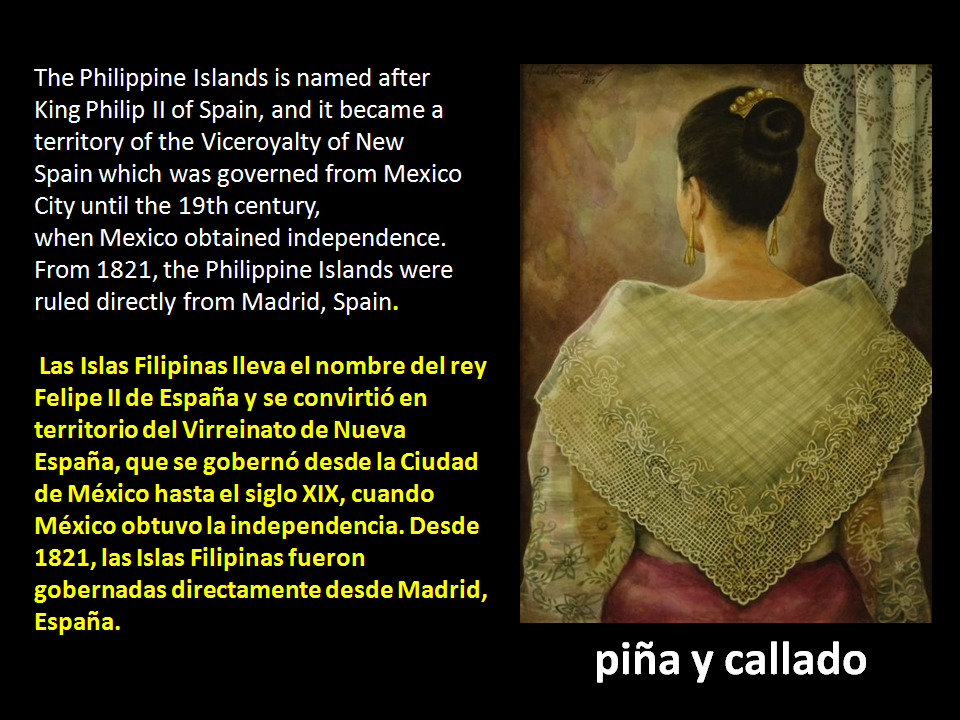
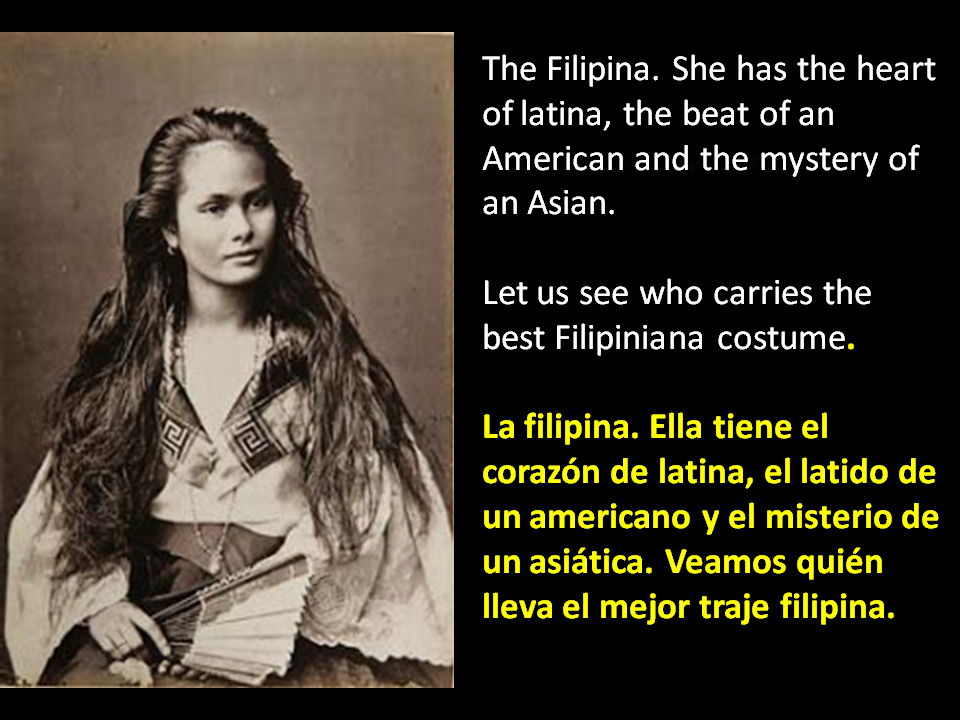
The “baro’t saya” ( blouse and skirt) which were made from stiff and sheer materials on loose top with well-pronounced bell sleeves made from handloom textiles, mostly starched, to make them stylishly stiff. The kind of material used was dependent on what the status a woman was in society. The finest pineapple fiber called piƱa was for the affluent and high society ( called the insulares) while the rough banana fiber called “abaca” with fabric called “sinamay” was for the peasants ( called the peninsulares). This was apparent in Iloilo, the textile capital of the Philippines during the Spanish period.
The dress came with a triangular “paƱuelo” (handkerchief ) or huge tusseled “Manton de Manila” scarf worn over the shoulder, and a “tapis “ ( a rectangular fabric) wrapped around the waist. The sweeping mermaid shaped skirts called “serpentina ” were made of cotton in handwoven patterns of stripes or checks.
.
For 300 years, the Filipiniana barely evolved until the Americans came for 50 years. The bell sleeves were flattened to become the signature butterfly sleeves of the “terno” so they could be detached and kept in wooden chests called “baul.” I remember my grandmother ( or "abuela" in Spanish for grandmother and her "primas" ( cousins) when the "muchacha" ( Ilonggo for house helpers) delicatelty pinned the butterfly sleeves on their "kimona"( saddle shaped) "baro" top. So to conclude, the bell sleeves when removed from the "baul" became flat, and when worn looked like butterfly wings! The "baro" were never washed because of the undergarment called "camisola" made them clean anyway. So they just went back to the "baul" flattened as thin as paper.
The influence of America transformed the national costume into body hugging silhouettes with stylish almost like Hollywood style draping and the use of modern textiles like chiffon and synthetics as well as three-dimensional decorations like flower appliquƩs.
They were embellished with exquisite needleworks such as “callado” ( fret work embroideries), intricate beadworks until recently handpaintings or mix media decorations. Accessories came in the forms of “abanicos”( fans), “payong” ( umbrellas), “sombreros ( hats), “panyo”( hankies) , “baston” ( cane) and “filigrana” ( gold antique jewelry).
The distinct Filipino style is known to be the “ fondness for anything sheer” with the top garment so revealing to show the undergarment “camisola.” This sheerness is also found in the Filipino Spanish houses in “ventanillas” ( cut-outs), “barandillas” ( balusters) , “senefas “ ( fretworks) and capiz shell windows all transparent or punctured for see throughs.
It is said that one of the most elegant national costumes in the world is that of the Philippines with its unique and distinct BUTTERFLY SLEEVES.
Aristocratic they look. As flambouyant as the butterflies could be.

Escuela teaches the classical way to construct a terno. 


Shibori NO TWO PIECES ARE ALIKE

rocess.
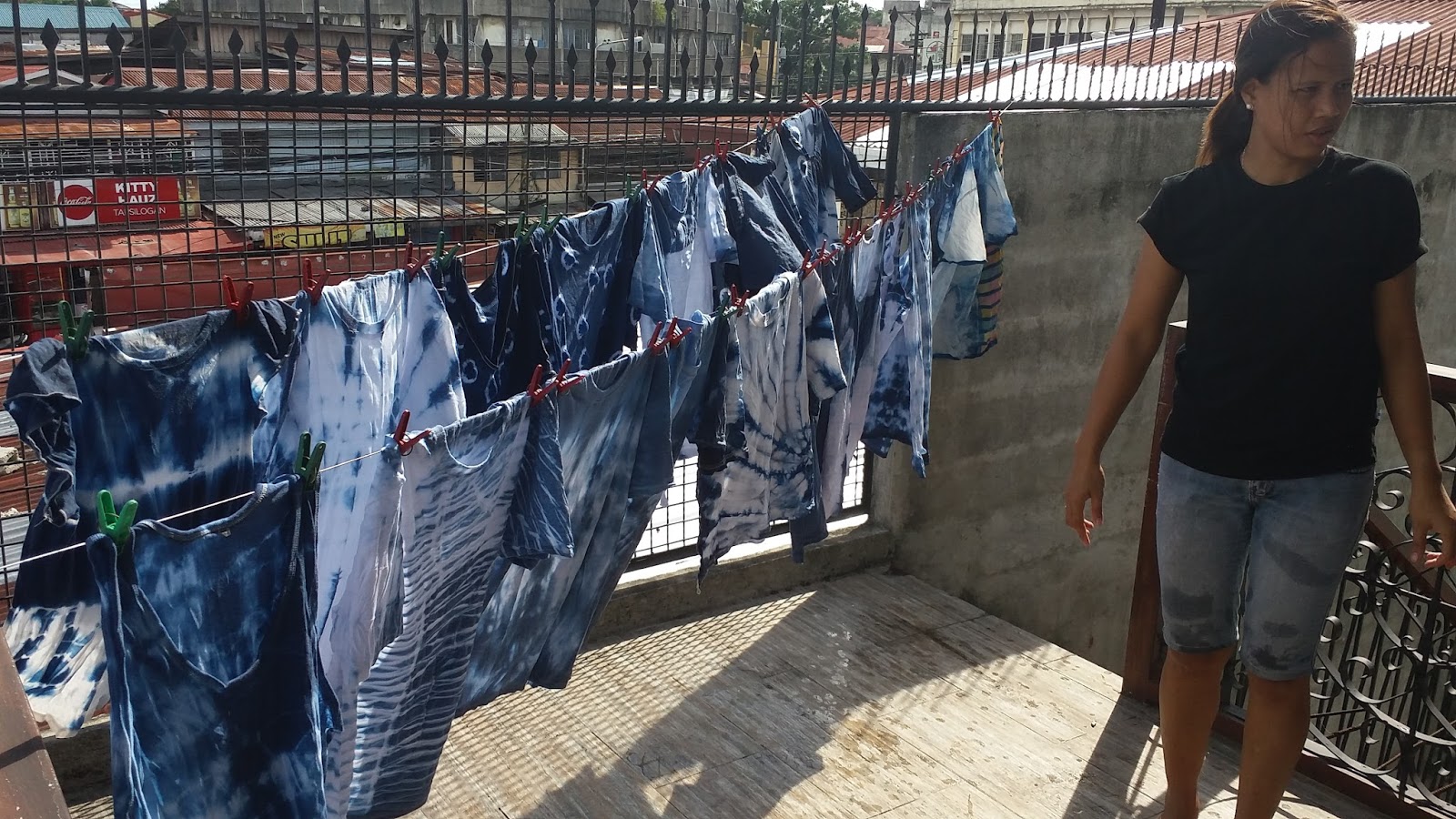
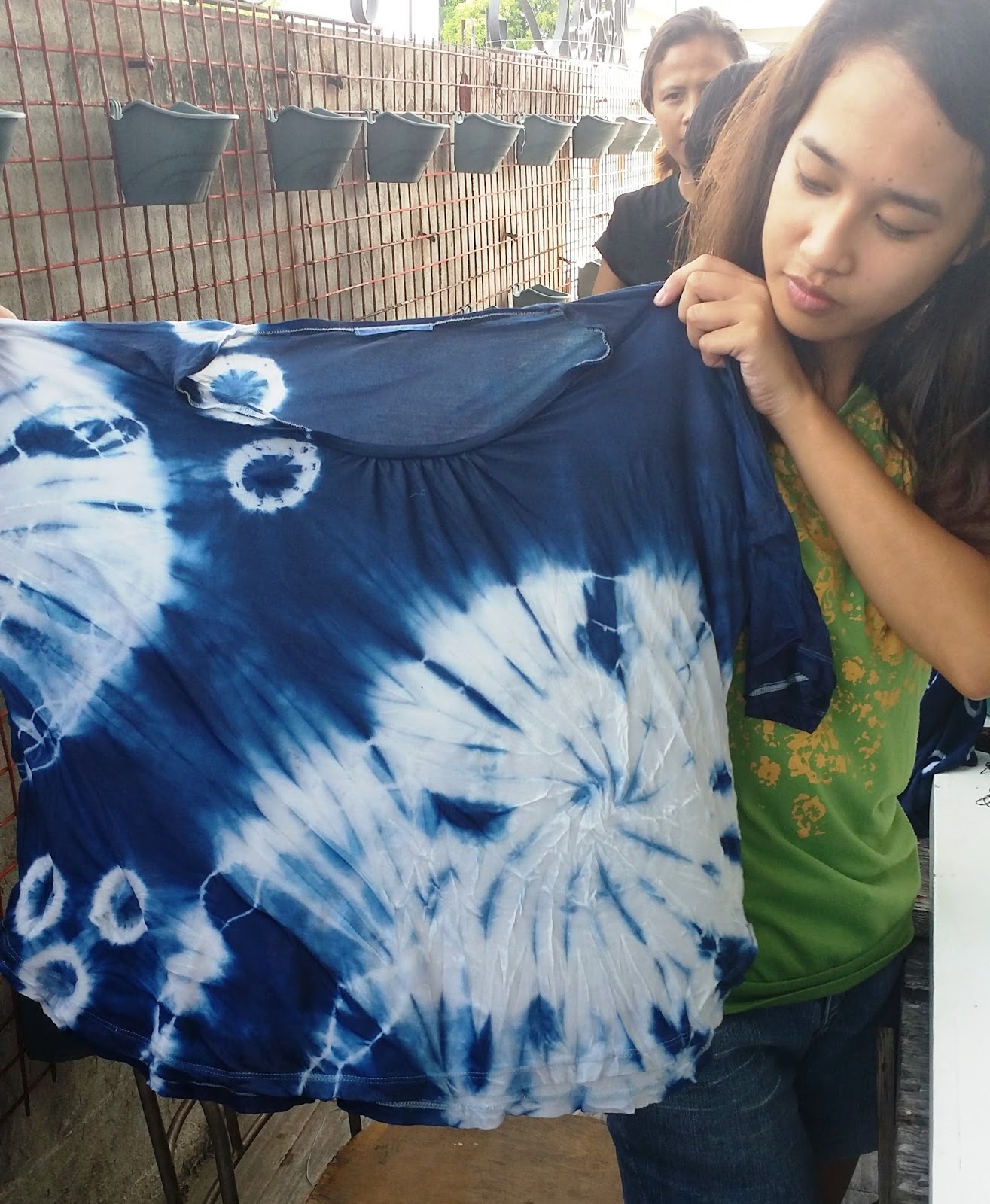
Shibori is an ancient Japanese tie-dye technique developed during the Edo period in Japan. Unlike the more common tie-dye style which became popular in the west in the late 1960s, shibori is a process of painstakingly placed folds, clamps, stitches and knots done prior to the dying process. Western style tie-dye is done mainly by knotting or twisting the fabric and never reaches the level of intricacy, diversity or three-dimensionality seen in shibori. You have several options to prepare the cloth before the dye processp


SCHOOL OF THE LIVING ARTS & CRAFTS while teaching is living and not boring because it teaches EXPERIENTIAL METHOD. Our school does not have HOMEWORK. We study only with CREATIVITY in mind.
Today we end our summer classes at Escuela I-fashion Iloilo as we will start our regular June 2017 classes soon.
Escuela is a design led-school for arts and crafts for entrepreneurship, a first in the Philippines. It is a vocational short courses certificate school with very minimal tuition fee as it is socialized. It is a school that has no textbooks, no long tedious lecture classes, no rigid formalities in enrollment and best of all no homework.
The teaching method is the teacher, a practitioner or trained and talented in his own field, mostly volunteer individuals, sharing his/her experience and skills by only 20% while the rest is 80% discovered by the students through their exercises and questions, mostly shared. The method called experiential instructions or teaching is designed by international lifestyle designer and mentor, PJ Aranador. It is simple. Teaching from experiences and translates them into individual initiatives.
The school uniquess its that a class can be of any age, child , youth, adult and seniors thereby creating bonding and collaborations at all levels. Same for any social class in society.
It also offers scholarships from donors to those who can not afford to go to crafts and art school.
The school mission is for its trained graduates, informal and vocational courses, can make a living our of them through entrepreneurship, than becoming a laborer and work abroad. Rather, we work in our country as we become part of nation building.
Our school is beautiful set in a rennovated 1920 building in the heart of Iloilo because we believe to give an professional learning, we need a professional and beautiful environment.
We charge minimally for materials which the school provides. Call 09189097362 or visit our website escuela6633@wordpress.com


SHIBORI. We do believe the future of humanity is doing something with our hands. There are so many ugly things and situations in our life, in our society, in many events in our life today. If only people will keep our hands busy, our world will be a better pace to be. We do advocate the shift of humanity away from wars and disconnections, we instead build peace with our hands and hearts to create what could mean livelihood so the world will not be hungry.
REQUIREMENTS: One white cotton T Shirt ( or you can bring more), rubber bands, empty round cylindrical vine bottle, any strings including straw ropes, any color thread and big sewing needles, plastic cloth clips/pins, rock salt, some old newspapers and apron if you have. For scholarships, please sent letter of request to our email at ifashionacademy@ yahoo.com.

REQUIREMENTS: One white cotton T Shirt ( or you can bring more), rubber bands, empty round cylindrical vine bottle, any strings including straw ropes, thread and big sewing needles, plastic cloth clips/pins, rock salt, some old newspapers and apron if you have.
Subject Name: Shibori
Subject Code: 018A-SS17 Subject Competency: Craft Skills
• Subject Description: An artisanal skill course on practical arts for textile manipulations using the Japanese traditional technique in manual resist dyeing technique, which produces patterns on fabric. Basic skills in pleat and bind technique to produce creative patterns on textiles. The students will bring home their creations as a piece of souvenir and reminder of their explorations with the living arts and crafts.
• Age group: 15 years old and above including senior citizens.
• Requirements: Latex gloves, white t-shirt, rags, scissors, blade cutter, old news paper. Hair dryer if you have. School will provide the indigo colors, binders and muslin fabrics.
 • Fees: Php 850 per student. A 15% discount will be given to the first three enrollees and for enrollment for a group of five (5) students.
ALL FEES are subject to change without prior notice.
• Duration: 4 hours workshop.
• Number of workshop sessions: One session only
• Workshop Certificate: The students will be issued a certificate of completion for the workshop
• Schedule: Any one of the following dates May 11 or 12, 1-5 pm. A minimum of 12 students will commence the start of the workshop class. Below the minimum number, the school has the discretion to reschedule or continue the classes with few students. For workshop classes with more than one sessions, the schedule may be subject to change to the convenience of the students on the first day of its meeting.
•
ALL CLASSES and SCHEDULES are subject to change and shall be advised to the students ahead of time. Weekdays, weekend, night school for working professionals ( 5:30 pm -8:30 pm ) are available.
• Enrollment On-line: For minors below 18 years old, a parent or guardian must fill up the enrollment form. See enrollment form in this post. Accomplish the form and return back to us on-line through email, facebook messenger.
• Enrollment at the school: Forms will be available at the school.
• Payment by bank:
Bank : Bank of Philippine Islands
Account Name: I FASHION ACADEMY, INC.
Account Number : 009143 - 0021 – 68
Email your deposit slip for the school to confirm your enrollment.
• Payment at the school: Cash payment is acceptable before the classes at the school. Pay at the school admin office.
 • Fee cancellation: The school will only refund 50% of the fee 3 days before any attendance is cancelled. The school will not refund cancellations on the day of the class. Change of schedule when needed by students can be moved to other timings is instead encouraged.
• Email address: i_fashionacademy@yahoo.com
• Alternate email address: pj_aranador@yahoo.com. Email directly to Mr. PJ Aranador
• Contact Numbers: 09189097362 PJ Aranador Landline PJ Aranador office ( 033) 321-0370 School (033)-336-3146
• On-line messengers: FACEBOOK I-fashion Iloilo
FACEBOOK PJ Aranador
On-line Information:
WEBSITE
Escuela Website (Wordpress)
Domain: escuela6633
Name: Escuela de Artesanias
Email: escuela0221@gmail.com
YOUTUBE: Escuela Iloilo City
• School Address: Second Floor, Ybiernas Building, Esquina Calle Zamora and Gen. Hughes, downtown Iloilo City. The school is facing Plaza Independencia across the Iloilo City Hall. At the ground floor is Land Bank. See map with this information sheet.
 • Scholarship Program: Students may avail of the scholarship through our individual or corporate sponsors. Fill up the enrollment form and the school will call the applicant for an interview. The school launches design competitions for which the prizes are in the form of scholarships.
• Working Student, On-the-job Training, Internship. Applicants will submit a letter of intent to the school address to Mr. PJ Aranador. Application will be approved on the basis of qualifications and available matching programs at the school. The applicant can attend classes by working at the school.
• Extension Program. The school accepts extension class program outside of the school premises such as those in communities, other campuses or livelihood centers.
NO TWO PIECES ARE ALIKE. Shibori is always a class act on its own. Our students created these collection of shirts and garments, some are used clothing or clothing with stains, so we upcyled them into beautiful creations. We will post each shirt soon in our facebook to sell on-line to raise funds for our school to pay our electricity and rental. We know one day we will be able to make both ends meet running our school (sob!).
Thank you to all our students and volunteer youth mentors who sacrificed the hard work in setting our firewood to boil our dye as their eyes got tears from the smoke! But no big deal, we are so happy with the results. It took one day to make all these no matter how tedious.
Escuela teaches Shibori among other crafts for living. Watch for our courses from June 2017 onwards.


UNFOLDING. SHIBoRi class at Escuela de Artesanias I-fashion Iloilo. Artists do work so hard, we forget how we look but our hearts are full of happiness. The most awaited part of shibori, Japanese art of tie dye, is unfolding our works after the knotting, wrapping and whatever crazy manipulations we did. It was worth the wait and the excitement will always remain in our craftsmen's heart forever. I was so elated my friend Reenee Alvarez from Bacolod City really took time to do the course. Look what lovely shirt and shorts you did you can wear for the beach! 
https://www.facebook.com/photo.php?fbid=10212139586061384&set=pcb.10212139708344441&type=3&theater